
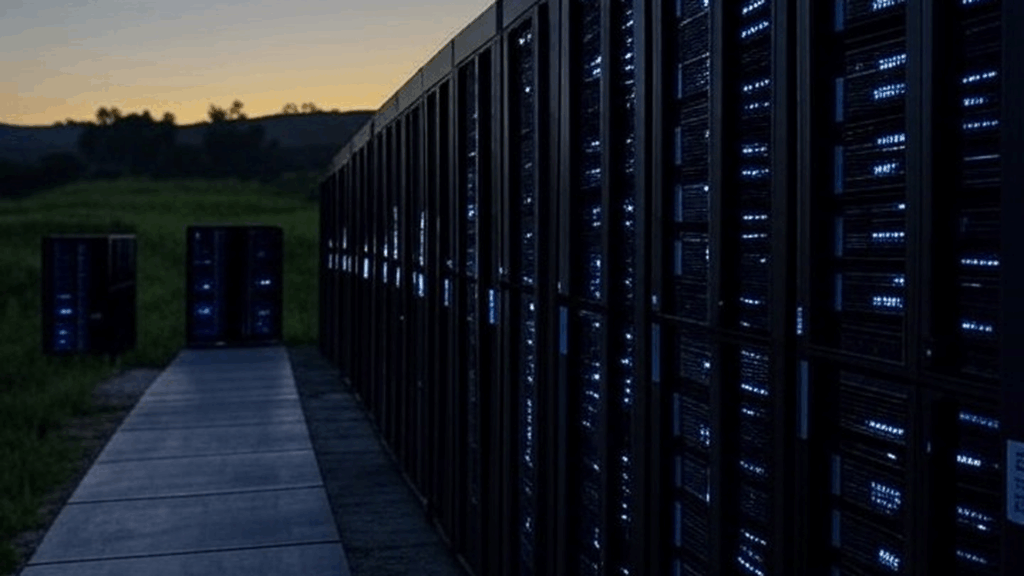
Microsoft announced Maia 200, a first‑party AI inference accelerator built on TSMC 3 nm, optimized for low‑precision LLM inference and token generation. It is live in at least one US Azure region, tied into Azure’s control plane, and ships with a full SDK stack for developers.
My Analysis:
This is Microsoft’s clearest move yet to treat Nvidia as optional for inference at scale. Maia 200 is not trying to be a general training GPU. It is tuned for FP4 / FP8, token throughput, and cost per token. That is exactly where hyperscalers feel the most margin pressure today.
Several key infrastructure signals:
1. GPU Supply Chain Diversification
Microsoft is using TSMC 3 nm and building a custom inference ASIC that competes directly with Amazon Trainium and Google TPU for the “we cannot afford to run this all on Nvidia” tier.
The claim of 3x FP4 performance vs Amazon Trainium v3 and better FP8 than Google’s latest TPU is less about benchmarks and more about positioning. Microsoft wants to own its own cost curve on inference, not rent it from Nvidia.
For enterprises, this means Azure AI economics will start to look different from GPU‑based clouds. Expect “Maia‑backed” pricing tiers for Copilot, GPT‑5.2, and Foundry workloads that undercut traditional GPU inference SKUs.
2. Inference‑First Data Center Design
750 W SoC TDP with heavy HBM3e and SRAM plus tight liquid cooling screams “designed for dense, hot inference clusters.”
Closed loop liquid cooling with second‑generation heat exchanger units signals that Microsoft is comfortable pushing rack power density higher. That matters as power and cooling limits are becoming the real gating factor in AI expansions.
They highlight a two‑tier Ethernet‑based scale‑up network. That is a direct shot at Nvidia’s proprietary fabric stack. Using standard Ethernet plus a custom transport layer helps Microsoft avoid vendor lock‑in in the network fabric and keeps their BOM and deployment flexibility under their control.
3. Data Movement as a First‑Class Constraint
The architecture is clearly built around narrow‑precision datatypes, specialized DMA, big on‑die SRAM, and a custom NoC. Translation: they are optimizing for token throughput, not just raw FLOPs.
This aligns with real LLM ops pain points. Inference clusters sit idle waiting for data or shuffle overhead, not pure compute. Microsoft is explicitly attacking that with a memory subsystem that is tuned for actual LLM access patterns.
For enterprises, the subtext is: Azure will increasingly encourage you to run large‑scale inference on Maia where they can guarantee consistent, predictable token throughput and better price per token.
4. Vertical Integration From Chip To Control Plane
They emphasize pre‑silicon modeling, fast time from first silicon to rack, and native integration into the Azure control plane (security, telemetry, management).
This is not just a chip drop. It is a vertically integrated platform that Microsoft can iterate every generation. That is the real competitive moat against smaller neoclouds and colos trying to assemble Nvidia + network + cooling piecemeal.
For enterprises, operational maturity matters more than FLOPs. If Maia shows up as “just another accelerator” in your Azure SKUs with standard APIs and support, it reduces perceived risk vs adopting some exotic accelerator vendor.
5. Datacenter Geography And Constraints
Initial deployment in US Central (Iowa) and upcoming US West 3 (Phoenix) fits the pattern:
– Iowa: relatively cheap power, cooler climate, good for dense, liquid‑cooled loads.
– Phoenix: water‑stressed region, but a major strategic hub where Microsoft is clearly willing to invest in advanced cooling and high‑efficiency systems.
Rolling Maia into these regions tells us Microsoft is comfortable running very high‑density AI loads where power and water are already hot‑button issues. Expect more regulatory and community scrutiny as these Maia‑dense builds roll out.
6. Software Stack And Lock‑In Strategy
PyTorch integration, Triton compiler, an optimized kernel library, and a low‑level Maia language (NPL) with simulator and cost calculator is the playbook: make it easy to port, then easy to tune, then hard to leave.
They are clearly aiming at AI startups and academics as early adopters. If teams design for Maia economics from day one, it becomes painful to move that same workload to a vanilla GPU cloud with different price/perf and kernel behavior.
For enterprises, expect Azure reference architectures that tell you, explicitly, “put training on Nvidia / training‑optimized hardware; move steady‑state inference and synthetic data pipelines to Maia.” That mixed fleet will be the new normal.
7. Synthetic Data As A First‑Class Workload
Calling out synthetic data generation and RL for Microsoft’s Superintelligence team is important. Synthetic data generation is high‑volume, often latency‑insensitive, and extremely cost‑sensitive.
That is a perfect fit for custom inference silicon. If Maia can reduce the cost and energy per synthetic token, Microsoft can crank more data to feed next‑gen models without scaling Nvidia clusters linearly.
For enterprises, this foreshadows where “internal model improvement” workloads may land. If you build your own synthetic data pipelines on Azure, Microsoft will nudge you toward Maia as the lower‑cost rail.
The Big Picture:
This launch sits at the intersection of several big trends:
AI Hardware Arms Race And Sovereign Cost Curves
Hyperscalers are no longer just customers of the GPU supply chain. They are now chip designers that use Nvidia as one spoke.
Maia 200 is about cost sovereignty more than data sovereignty. Microsoft wants sovereign control of its inference economics. That is a quiet but serious shift in bargaining power with Nvidia.
Enterprises will feel this through differentiated SKUs and contract leverage. Azure will push Maia where it benefits their margins while still offering GPUs as a premium, flexible option.
Neocloud vs Public Cloud
Neoclouds and GPU‑rich colos lean on Nvidia’s roadmap and brand. Microsoft is signaling that the real economic action in inference will move onto first‑party silicon on hyperscale clouds.
This is a direct challenge to smaller players trying to win on raw GPU availability and price. Maia lets Microsoft undercut them on certain workloads while controlling hardware and energy efficiency end‑to‑end.
AI Data Center Build‑Out Under Power And Cooling Constraints
750 W accelerators, dense HBM, and closed loop liquid cooling mean Maia servers are power‑and‑heat monsters, but tuned for efficiency per watt and per dollar.
As grid capacity becomes a gating factor, every percentage uplift in performance per watt and per rack matters. Microsoft’s ability to pre‑validate the entire system and cut time from silicon to rack in half is also a construction and deployment advantage. They can bring new capacity online faster than traditional enterprise data centers can respond.
Enterprise AI Adoption And Cloud Repatriation
As AI workloads get more cost‑sensitive at scale, some enterprises are eyeing repatriation or neoclouds to avoid public cloud margins. Maia is Microsoft’s counter.
By owning the silicon and the stack, they can compress cost structures on high‑volume inference to keep TCO competitive while still selling the operational convenience of Azure.
Few enterprises will ever build or operate 750 W liquid‑cooled inference clusters efficiently on‑prem. Maia increases the gap between “what a hyperscaler can do per rack” and “what a typical enterprise colo can do per rack.”
Vendor Ecosystem Dynamics
Every Maia generation chips away at the TAM for third‑party accelerators in the hyperscale tier. For Nvidia, it means the growth story shifts more heavily toward training and toward enterprises and neoclouds.
For smaller accelerator vendors, this is a warning. If Microsoft can deliver competitive inference perf/$. at scale, the window for alternative inference ASICs in major clouds narrows.
Signal Strength: High
Source: Maia 200: The AI accelerator built for inference – The Official Microsoft Blog