
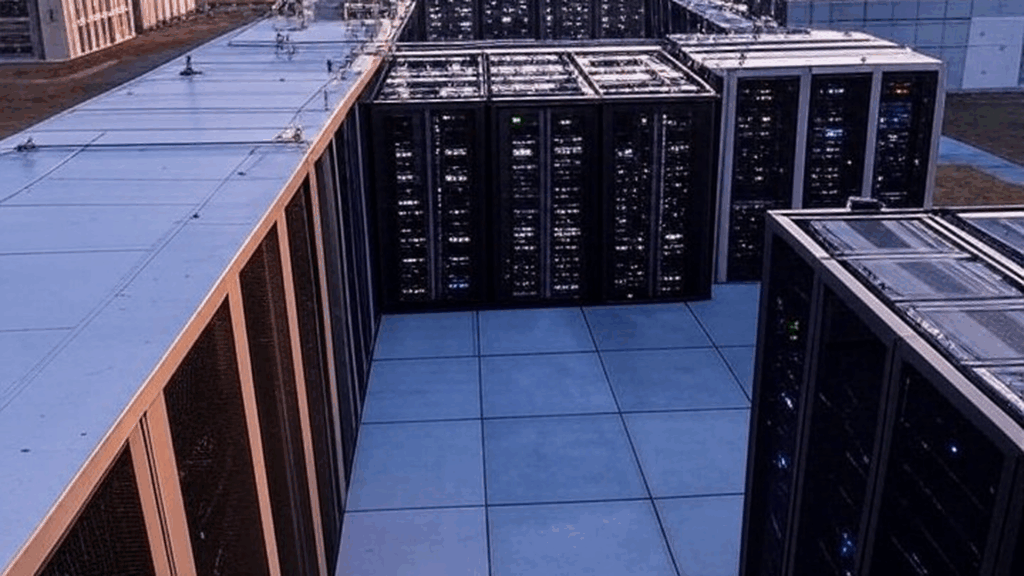
PowerHouse Locks In Hyperscale Tenant For 120 MW AI‑Ready Campus In Data Center Alley
PowerHouse Data Centers signed a long‑term lease with a hyperscale customer for its Arcola campus in Loudoun County, Virginia. The 37‑acre, 120 MW, GPU and liquid‑cooling ready campus in Northern Virginia’s Data Center Alley is now effectively spoken for as part of PowerHouse’s national expansion.
My Analysis:
This is another data point that Northern Virginia is still the gravitational center of AI infrastructure despite power constraints. A 120 MW, Tier III+/IV‑ready, GPU‑dense, liquid‑cooling capable build tells you the tenant is planning serious AI and HPC clusters, not just generic cloud.
The real story is power and proximity. Arcola is labeled “power‑secured” in one of the most power‑constrained markets on earth. That usually means they locked utility capacity early, likely with on‑site substations and long‑term agreements that many latecomers cannot get. In a GPU‑first world, utility allocation is now as strategic as chip allocation.
The design choices telegraph where hyperscale architecture is going:
- High density and liquid cooling support means racks built for AI accelerators, not just CPUs.
- Tier III+/IV‑ready is about uptime for massive AI training runs where a bad outage can burn millions.
- Dense fiber and dark routes to Ashburn and Manassas signal this will sit inside a larger east‑coast AI mesh, not as an isolated site.
The LEED and “architectural aesthetic” positioning is not window dressing. Loudoun has real pushback on data centers, so noise, visual impact, and water usage are now gating factors. Outdoor water‑use reduction and tree buffers read like a response to community and regulatory friction. Operators know that without a YIMBY posture, future permits get harder.
For enterprises, this is more evidence that:
- Hyperscalers and large AI players are soaking up most of the prime, power‑rich capacity.
- If you are not booking capacity 2 to 4 years out or working with secondary markets and neocloud providers, you will be on the waitlist.
- “AI‑ready” increasingly means liquid cooling, high‑density power per rack, and direct fiber into hyperscale cores. Anything less will look dated fast.
This also reinforces the “technical real estate” model. PowerHouse is positioning as the powered‑shell and campus specialist that lets hyperscalers move faster than they can with their own greenfield builds. In a constrained power and GPU market, speed to energized shell near key interconnects is a competitive weapon.
The Big Picture:
Zoomed out, this fits into several macro trends:
AI data center construction surge
Northern Virginia continues to attract massive AI‑class builds despite grid pressure and political scrutiny. A 120 MW, GPU‑dense campus is pure AI era capacity. It shows that the construction wave is not slowing, it is just becoming more power‑centric and more specialized.
GPU availability and supply chain
Nobody commits to this scale of high‑density, liquid‑cooling capacity unless they expect multi‑year access to accelerators. Facilities like this are being lined up to receive future GPU and custom AI ASIC waves, not just current H100/H200 deployments. Real constraint is shifting from “can I get GPUs” to “do I have a site that can power and cool them.”
Energy and water constraints
Emphasis on “power‑secured” and LEED, plus water‑use reduction, points to a future where energy and water are co‑equal design constraints. Expect more on‑site substations, grid‑friendly design, and creative cooling approaches to satisfy both utilities and local governments.
NIMBY vs YIMBY in AI data centers
“Architectural aesthetic,” tree buffers, and sustainability language are signals to local regulators and residents. Data center operators are learning they must buy social license to keep building in top markets. Loudoun stays a YIMBY for AI only if projects look and behave more like good neighbors than industrial boxes.
Vendor ecosystem dynamics
PowerHouse is carving out the developer / powered shell slot in the stack. Hyperscalers keep control of their logical and GPU architecture but outsource dirt, power, shell, and some MEP risk. That splits the ecosystem into:
- Hyperscalers and AI clouds,
- Neoclouds and GPU specialists,
- Infrastructure REIT‑style developers like PowerHouse.
Enterprise AI adoption and cloud dependency
As hyperscalers pre‑book most power‑dense capacity in core markets, enterprises get pushed toward:
- Managed AI platforms on public cloud,
- Regional / Tier II markets,
- Neocloud providers that can secure capacity with developers like PowerHouse.
It strengthens the trend where only the biggest players own tier‑one AI facilities; everyone else rides on top.
Signal Strength: High