
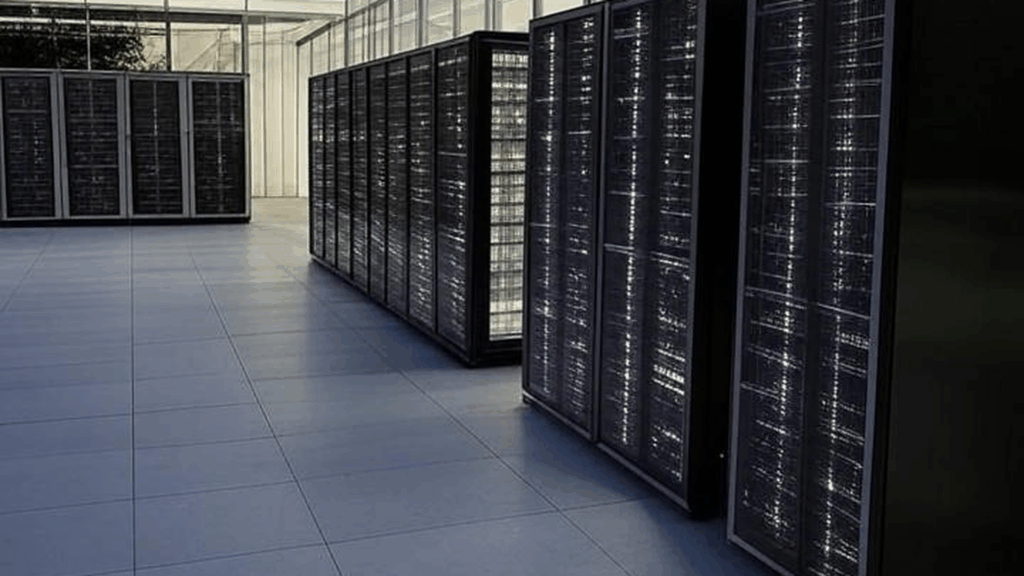
Retail Colocation Set To Triple As AI And Cloud Push Enterprises Back To Physical Racks
HTF Market Intelligence projects the global retail colocation market to grow from 46.2 billion USD in 2024 to 137.4 billion USD by 2033, a 14.5 percent CAGR. The report highlights strong demand across regions and verticals, with trends like edge, high density, and green colocation.
This is the physical substrate of AI and cloud quietly scaling up. Retail colocation is where enterprises that cannot or will not build their own facilities go to get power, cooling, cross-connects, and predictable latency.
For AI infrastructure, several signals matter here:
- High density racks and AI powered cooling tell you GPU clusters are absolutely landing in colo, not just hyperscale cloud. You do not retool cooling for basic web workloads.
- Hybrid colocation and interconnection services exist to stitch neoclouds, public cloud, and on-prem together. That is the operating model for most serious AI deployments over the next decade.
- Edge colocation aligns with inference at the edge. Retail, banking, and telecom all want lower latency without building their own mini data centers.
Big operators like Equinix, Digital Realty, NTT, CoreSite, Cyxtera, TierPoint, Flexential and regional players become the de facto “AI co-processors” for organizations that cannot get into hyperscaler GPU queues, or that need data residency control. The named “AWS Colo” and “Google Cloud Partner Colo” angle is also important. Hyperscalers are not just the competition. They are tenants and partners. Think GPU islands in third party facilities directly cross connected to cloud regions.
The report calls out power shortages and regulatory compliance as challenges. That is the real constraint for AI growth. Capex on concrete and steel is easy compared to securing long term, high density power and water in markets that are increasingly skeptical of big data centers. Retail colo operators with secured power contracts and credible sustainability stories will have pricing power.
Sovereign AI is implicit here too. Asia-Pacific as the fastest growing region fits with governments and national champions pursuing localized AI infrastructure. Colocation lets them stand up “sovereign adjacent” capacity fast while they design or upgrade national facilities.
For enterprises, this is a validation of the default pattern I see in the field:
- Core systems and data in colo if they can’t be supported in customer owned facilities
- Multiple clouds attached via high speed interconnect
- Specialized AI clusters living either in colo or neoclouds, not just general purpose public cloud
- Gradual repatriation of steady state workloads to colocation once cloud bill shock hits
The Big Picture:
This plugs directly into several macro trends.
AI data center construction surge:
Most people focus on hyperscale campuses, but a huge amount of future AI compute will sit in retail colo cages inside multi tenant facilities. High density and AI focused cooling investments are the tell. Retail colo becomes the middle class of the AI data center world. Not a home lab. Not a hyperscaler. Everything in between.
GPU availability and supply chain:
As GPUs remain constrained, enterprises will increasingly source capacity from neoclouds, boutique GPU providers, and integrators who deploy into colocation sites listed here. Retail colo is where these specialized GPU clouds physically live. That strengthens the neocloud ecosystem because they get global footprint without having to become facility developers.
Neocloud vs public cloud and cloud repatriation:
Hybrid colocation and cloud based colocation are a direct enabler of “use cloud where it makes sense, own the rest.” Firms burned by egress fees and variable cloud economics are moving predictable workloads into colo, then attaching to cloud and AI services via low latency links. That pattern makes it easy to:
- Run private or open source models on your own GPUs in colo
- Burst to cloud or neocloud for peak AI training or inference
- Maintain data residency and compliance
Sovereign AI:
Regions like Asia-Pacific growing fastest highlights how countries and local carriers use retail colo to stand up compliant, in country infrastructure. Telecom and national cloud providers can host sovereign AI stacks in domestic colo facilities while still tapping global vendor ecosystems.
Energy and water constraints, NIMBY vs YIMBY:
Power shortages and environmental concerns in the report are not academic. They are the gating factor for every new high density AI deployment. Many local communities are shifting to NIMBY on new greenfield data center builds. Multi tenant colo operators with existing entitlements and efficient designs are in a stronger YIMBY position. They can argue consolidation and greener shared infrastructure versus everyone building their own site.
Vendor ecosystem dynamics:
The vendor list shows the stack: global colo giants, carriers, cloud providers, and regional specialists. No single layer owns the customer anymore. The competitive game is:
- Who controls the interconnection fabric
- Who can guarantee high density racks with power availability
- Who offers the cleanest, most compliant footprint per region
That will shape where AI startups, neoclouds, and traditional enterprises place their hardware.
Enterprise AI adoption:
The fact this is a “retail” colo report is key. This is not just about hyperscale. It is about smaller but serious footprints. This is where:
- Banks put GPU nodes near trading venues
- Retailers run recommendation models close to POS and logistics systems
- Healthcare organizations keep PHI resident while connecting to external AI services
In other words, this is the infrastructure layer that will carry the messy, regulated, real world AI workloads that cannot live entirely in public cloud.
Signal Strength: High
Source: Retail Colocation Market Is Going to Boom | Major Giants Equinix,