
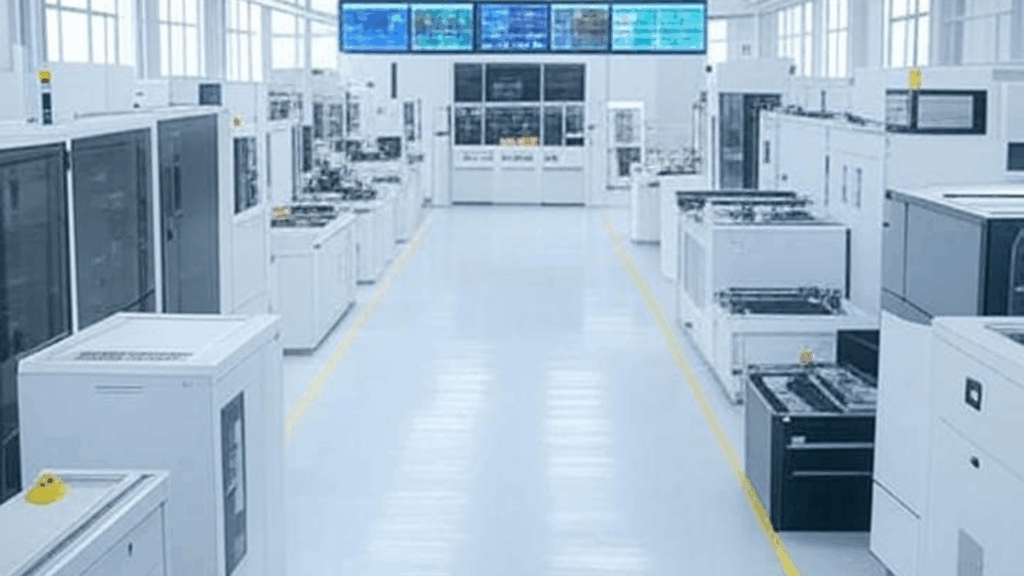
HPE and NVIDIA Push “AI Factory” Blueprint for Sovereign, GPU‑Dense Data Centers
HPE and NVIDIA expanded their partnership to deliver “AI factory” solutions, including a new AI Factory Lab in Grenoble for EU‑based, sovereign AI testing, new AI‑optimized networking, and GPU‑dense systems like the NVIDIA GB200 NVL4 by HPE.
They also extended HPE Private Cloud AI with Blackwell GPUs, MIG‑based GPU fractionalization, security hardening, and new Alletra X10000 data intelligence nodes that bring NVIDIA acceleration directly into the storage layer.
Analysis:
This is HPE trying to lock in the enterprise and government AI factory pattern before hyperscalers or local neoclouds do.
The Grenoble AI Factory Lab is a clear sovereign AI play. EU workloads, EU location, EU compliance, air‑cooled and “government‑ready” software. That is exactly what regulators and large European enterprises are asking for when they say “AI must stay in‑region.” It gives customers a place to benchmark, prove compliance, and then stamp out similar designs in their own facilities or sovereign clouds.
On hardware, HPE is aligning tightly to NVIDIA’s roadmap.
Blackwell RTX PRO 6000 server GPUs and GB200 NVL4 by HPE give customers a dense rack‑scale building block for inference and lighter training without going to full GB200 NVL72‑class power and cooling. Up to 136 GPUs per rack is aimed at brownfield data centers that cannot support the power and cooling footprint of larger superpod‑style deployments. That is directly about fitting AI into existing facilities instead of waiting for mega‑campus builds.
GPU fractionalization via MIG inside HPE Private Cloud AI is a big operational signal.
Enterprises are not running 100 percent GPU utilization. They are running mixed workloads, POCs, small LLMs, and fine‑tuning side by side. Being able to slice GPUs gives better economics and makes on‑prem AI factories more palatable for CFOs. It is also an answer to GPU scarcity. If you cannot get as many GPUs as you want, you need to sweat what you do have.
Networking is a quiet but important part here.
HPE is wrapping NVIDIA Spectrum‑X Ethernet inside the data center fabric and then using HPE Juniper MX and PTX for DCI and edge on‑ramps. That is a full AI data path from edge devices and branch sites into centralized AI factories, across regions, and even across multiple clouds. It tells you that customers are now planning multi‑site AI clusters, not just one big room full of GPUs.
Alletra X10000 “data intelligence nodes” matter for pipeline efficiency.
Bringing NVIDIA AI Enterprise into the storage data path to do inline classification and optimization means HPE wants to turn storage into an active preprocessing tier. The more preprocessing and filtering you can do near where the data lives, the less GPU time you waste on junk. For AI factories, the bottleneck often is not pure GPU flops. It is data staging, curation, and IO. Putting accelerated compute in storage is one way around that.
The security stack is not just checkbox marketing.
STIG‑hardened, FIPS‑enabled NVIDIA AI Enterprise for air‑gapped environments, CrowdStrike as the default security plane, and Fortanix for confidential computing all say the same thing. The target buyer is a regulated enterprise or government that wants on‑prem or sovereign AI, zero trust, and auditable controls. That is the cohort most likely to build their own AI factories instead of only renting from hyperscalers.
Net effect.
HPE is positioning itself as the systems integrator of NVIDIA‑centric sovereign AI factories. If you are building a national AI cluster, a bank’s private AI cloud, or a regulated sector AI facility, HPE wants to sell you a full reference architecture. From racks and power envelopes through GPUs, networking, storage, and cyber controls. That is classic enterprise infrastructure territory and a direct answer to the neoclouds that are pitching “NVIDIA‑native” hosted AI regions.
The Big Picture:
This hits several macro trends at once.
Sovereign AI:
The Grenoble AI Factory Lab is practically a reference sovereign AI zone. EU location, EU compliance, and air‑gapped and hardened options. It is a response to governments that want domestic control over data and model training. Expect similar labs in other regions. This is how vendors de‑risk big public sector AI projects and prove “your data and your models never leave your jurisdiction.”
Neocloud vs public cloud:
HPE Private Cloud AI plus NVIDIA hardware plus sovereign reference designs is a neocloud pattern. It is “cloud‑like AI platform” but deployed in your data center, your colo, or a sovereign provider. This is exactly the space regional players and telcos are trying to occupy. HPE is arming them with a standardized AI factory stack, which increases competition to the big three hyperscalers for regulated and latency‑sensitive AI.
AI data center construction and constraints:
The GB200 NVL4 system and air‑cooled Grenoble lab both acknowledge physical limits. Power, cooling, and water are constraints. Not every facility can deploy liquid‑cooling at hyperscaler scale. Compact, relatively power‑efficient systems let enterprises slot AI into existing cages and halls while they plan bigger, more efficient AI builds. It is an incremental path rather than a full tear‑down and rebuild.
GPU availability and utilization:
Choice across Blackwell, Hopper, and MIG‑based fractionalization is about managing scarce accelerators. Enterprises are learning fast that raw GPU count is not enough. You need utilization discipline, right‑sizing, and shared pools. HPE is leaning into this with Private Cloud AI, scheduling, and partitioning. As GPU supply stays tight and pricing high, this kind of efficiency tooling becomes a buying criterion.
Vendor ecosystem dynamics:
NVIDIA is the center of gravity here. HPE wraps NVIDIA GPUs, networking, and software. Then pulls in CrowdStrike, Fortanix, WWT, and Carbon3.ai as value‑add. The message is clear. If you want NVIDIA‑first AI and do not want to be fully dependent on a hyperscaler, HPE will act as your prime contractor. That is a direct challenge to both large cloud providers and to smaller white‑box / ODM approaches that lack this curated ecosystem.
Enterprise AI adoption and cloud repatriation:
The focus on private cloud AI, secure air‑gapped deployments, and compliance‑ready reference architectures will accelerate “AI repatriation.” Many enterprises will prototype in public cloud, then migrate steady‑state training and inference into their own AI factories for cost, control, and regulatory reasons. HPE is building the landing zone for that move, especially in EMEA.
Signal Strength: High